Aug 14, 2026
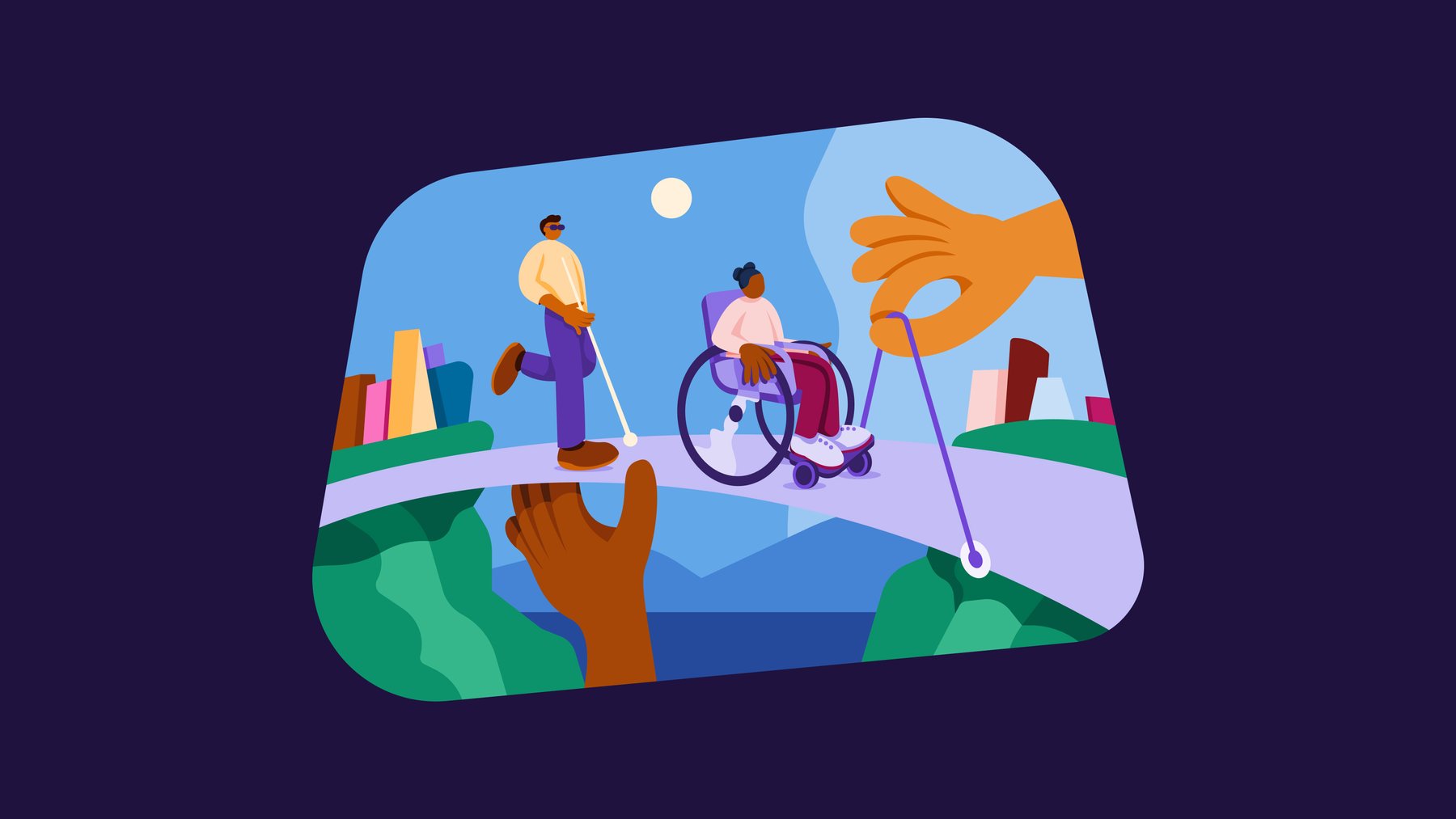
There is a phrase I repeat every time I give a talk or a workshop on accessibility: accessibility must be a base of the project, not a patch on the product. It is not a slogan. It is the distilled lesson of a journey that has taken us more than six years at Cabify, and it begins where almost every honest accessibility story in tech begins: with a product already out on the street and a debt to settle.
It is worth pausing on that distinction, because it holds up everything else. A patch is a reaction to a problem: something broke, someone was left out, and we rush to cover it up. A base is a decision: before we build, we accept that the building will have to hold everyone. When the base is solid, accessibility stops being an extraordinary effort and becomes a natural consequence of work done well.
At Cabify we went from patching to building on a solid base. Accessibility stopped being the task of a few and became the culture of everyone. And as artificial intelligence joins our teams, we are educating it like any other colleague, so that it too works for and toward accessibility.
Because in the end, this is about people and technology working together to make cities better places to live.
In 2019 there was no room to start from scratch. The rider app had been in production for years, with millions of people using it every day to move around their cities. The product and the service were already on the street; stopping everything to rebuild was not an option. The only possible path was to patch: reviewing what already existed, screen by screen, flow by flow, and making it work with screen readers.
That was our founding technical adventure, and we do not hide it. We started by patching, like almost everyone does. But even in that corrective work there was an intention aimed at the future. We ended the year with an app that was accessible to blind people, compatible with screen readers, and with something less visible but more important: a semantic base in the shared component repository. The seeds of progressive enhancement had been planted. A patch, properly understood, can be the first brick of the base.
As we closed that initial stage, we made a commitment that sounds simple when stated out loud: with every new update of the app, the level of accessibility already achieved must be maintained. If we can move a little further forward, all the better. But never backward.
Keeping that commitment is harder than it looks. Anyone who uses assistive technology knows it well. Updating an installed app is, far too often, an emotional rollercoaster for people with disabilities. A new version can introduce barriers where there were none, or wipe out at a stroke everything accessibility had achieved. There are people with disabilities who delay updates for months out of sheer fear of losing the autonomy an app gave them. That fear is real, and it is the direct consequence of treating accessibility as a patch. What is stuck on top all too often peels off with the next change. What is part of the base remains.
That commitment became the criterion that organizes everything else. It is not a spectacular goal; it is a quiet discipline. And that is why it works. Accessibility does not advance through heroic feats; it advances through consistency.
In 2020 we widened the circle and began working on improvements for deaf people and older people. The challenge was no longer purely technical; it was one of understanding. We simplified the interface and the user experience, and we asked ourselves an uncomfortable question: do we really know how these people experience our service? The honest answer was: not entirely. So we reached out to associations and organizations of deaf people and older people to understand their experience firsthand. Those were the first brushstrokes of co-design, moving from designing for to designing with. That practice, almost artisanal back then, became over time a way of working.
In 2021 we created the in-trip accessibility menu, a section of the app where each person with special needs can personalize their experience of the mobility service. This feature opened up a shift in philosophy: instead of assuming an average user who does not exist, the app recognizes that every person has diverse needs, and hands them the control. Personalization stopped being a hidden setting and became part of the journey.
Between 2022 and 2024 we worked on the overall visibility of the app, improving the color palette, the contrast, the language we use and the design of the user experience. These are decisions that benefit people with low vision, yes, but also anyone checking their phone in full sunlight, in a hurry, with one hand. It is the old lesson of inclusive design: what is designed for the margins ends up improving the center.
We also strengthened the accessibility guarantees in the components used to build every interface.
In 2024 we took a further step that carried accessibility into business territory. We certified the accessibility of the Cabify for Business website. Certification has a double value. Internally, it is a verifiable seal of quality. It is not enough to say that something is accessible; you have to be able to prove it against auditable criteria. Externally, it is a concrete competitive advantage. More and more companies and public administrations demand accessibility from their suppliers, and arriving with your homework done, and certified, opens doors that would otherwise stay closed. Cabify for Business became more competitive and of higher quality for the same reason: accessibility, when it is a base, is not a cost to be justified; it is an argument that sells.
In 2025, building on our design renewal efforts, we bet on legibility by creating our own typeface, known as Cabify Ciudad. A typeface designed to read well in motion, on small screens and in real lighting conditions, the ones out on the street rather than in the laboratory. That a mobility company ended up drawing its own letterforms says something about the journey: when accessibility is a base, it reaches all the way into the very shape of words.
In 2026 we continue to evolve our corporate design system so that every digital interface, and every piece of design connected to the company, inherits our advances in accessibility and usability while we modernize our visual identity. The goal is that no future product should have to rediscover what we already know: that accessibility is the base of the pieces everything is built with.
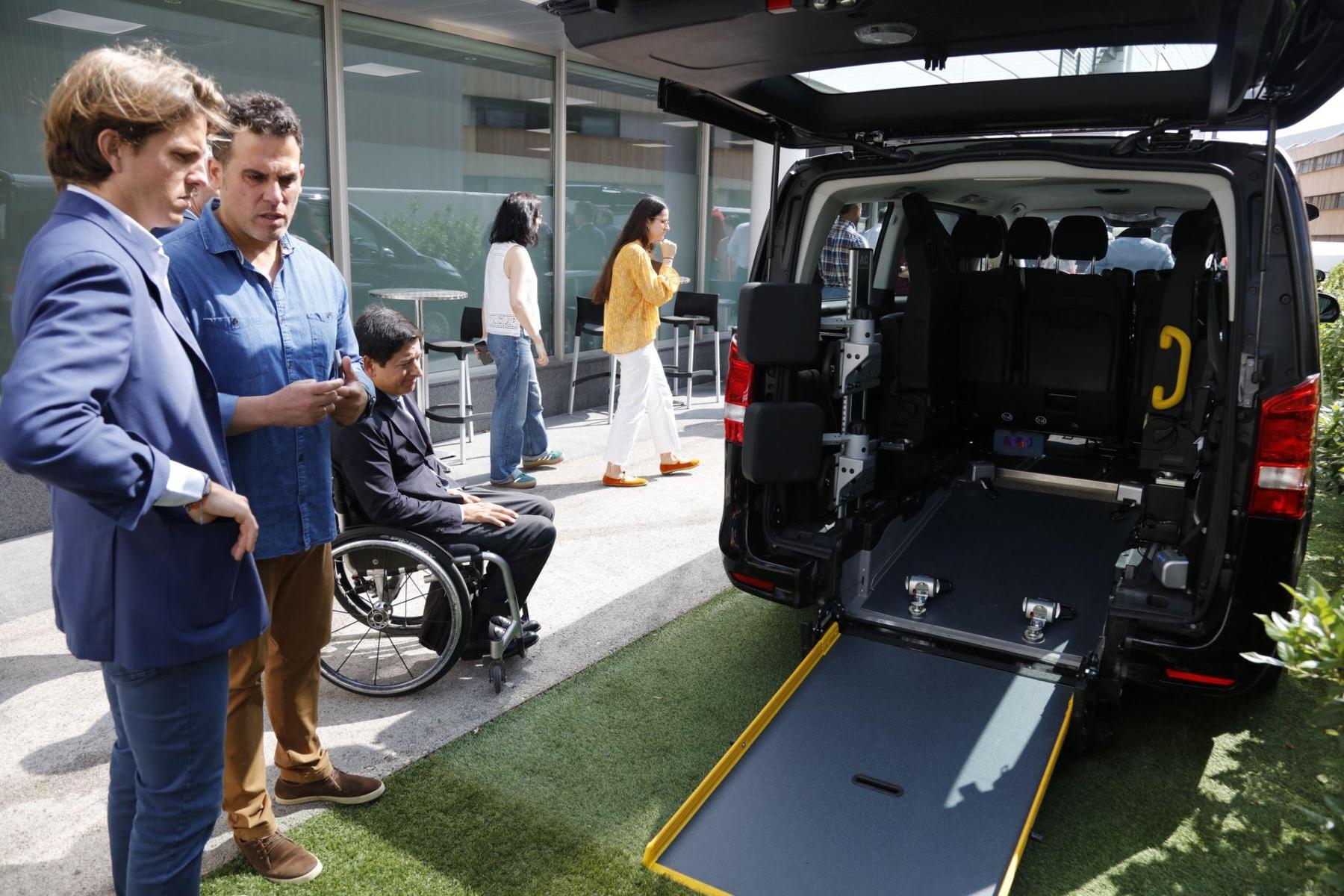
And while the base grew, accessibility spread across every team. It reached the driver app and various web interfaces. It gave rise to new information spaces, such as our passenger accessibility page. And it went as far as creating product categories where accessibility is not an attribute but the core value, since Cabify Access was conceived from the outset so that no one is left unable to move around their city.
That is the difference between the patch and the base. The patch fixes a screen. The base creates new product.
No technical timeline explains this journey on its own. You can audit every screen, certify every website and document every component; if people do not make it their own, it all erodes with the first reorganization. The full impact arrives when everyone in a company pushes in the same direction, and achieving that does not depend on a tool; it depends on the culture of the company.
We stayed with the strategy of demonstrating and inviting, never imposing.
Analyzing the information from our riders and their journeys, we could see that more than 600,000 people use our app with some accessibility feature enabled on their smartphones. That is not a marginal group or an edge case; it is an entire city of users. When that figure circulates through the company, the conversation changes: no one asks anymore whether it is worth it; the question becomes how to do it better.
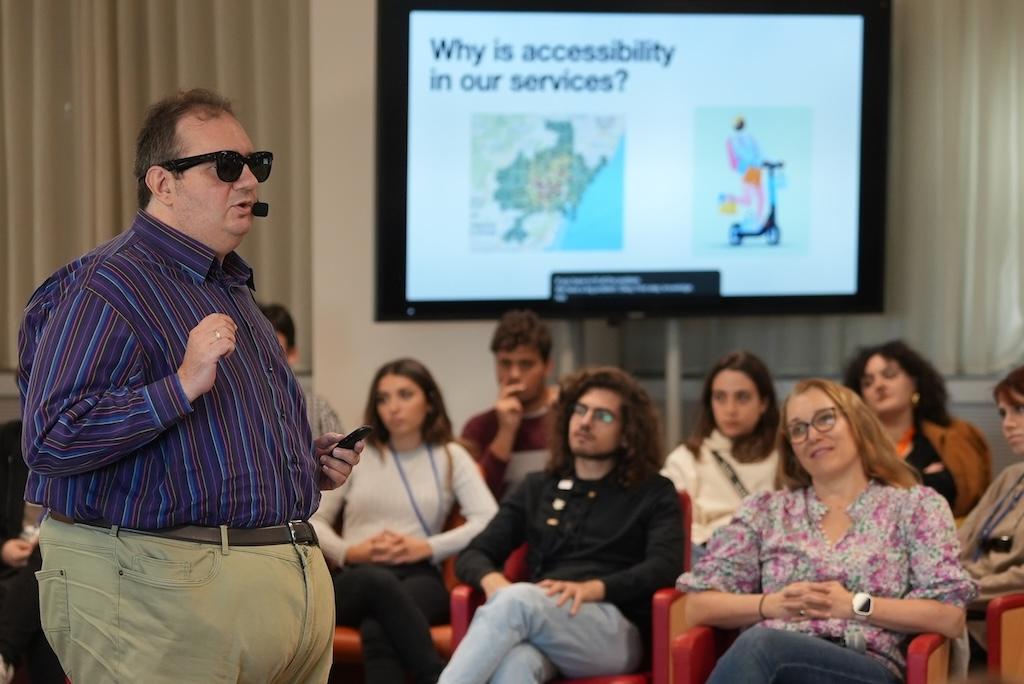
Demonstrating through recognition: mentions, an improved company image and invitations to events to share the way we work. In 2023, for example, Apple invited us to travel to Naples to talk about how Cabify works on accessibility and about the importance of this characteristic in our service. When one of the world’s leading names in accessibility wants to hear how you work, it validates years of effort, outward and, above all, inward.
And demonstrating through the support of communities of people with disabilities. Several organizations of people with disabilities in Spain and Latin America collaborate with us on an ongoing basis. Their participation keeps the work anchored to the reality that accessibility is not decided in a meeting room; it is verified in people’s lives.
And inviting, because accessibility is not imposed; it spreads. The creation and continuous evolution of a diversity committee, so that no one is left out, makes accessibility visible on the inside. The conferences and events where we talk about design, accessibility and inclusion make it visible on the outside. Inside the company there are internal awareness events and technical documentation that helps improve accessibility in every area of work, from design to development, from marketing to customer care.
Today, everyone working at Cabify knows about accessibility and disability. Not as a compliance requirement, but as a shared conviction. Accessibility is good for our customers and good for the company. It is a quality characteristic, with measurable returns, not a cost to be grudgingly absorbed. And that conviction rests on a simple idea we often repeat: people are better off with accessibility. Those who need it today, those who will need it tomorrow, and those who enjoy it without knowing.
That is why, when someone asks which team owns accessibility at Cabify, the answer has been the same for years: accessibility does not sit with a team or a person. Accessibility lives in every person at Cabify.
Cabify is a technology company, and since mid-2024 artificial intelligence tools have gradually been finding their way into the tasks and workflows of our teams. Today AI is a tool that is authorized and supported by the company. Everyone working at Cabify can learn and improve their work with it, always within a set of safety rules and accompanied by courses and workshops to understand how AI works and how it should be used. Training first; the tool second.
There is an expression that keeps coming up among colleagues and that sums up our stance well: AI is one more colleague. And like every Cabify employee, it must receive its dose of accessibility knowledge and learn the benefits of accessible design. It must also know our culture, our principles and our commitment to never going backward on what we have achieved. No one would expect a new hire to design our product well without knowing our values; the same goes for AI.
This is not an empty metaphor; it is a working plan. We have created skills aimed at building accessible user interfaces and at the early detection of accessibility barriers during design and development. Early detection is the key. A barrier caught at the design stage costs minutes; caught in production, it costs users. If AI takes part in building the product, accessibility must be part of its education from day one, not added later as a correction.
The company’s plan for the immediate future follows that direction: using AI as one more worker, involved in accessibility just like any other member of the team. And that is what we are working on. Because the risk of not doing so is obvious. An AI with no accessibility training generates patches at a speed no human team could ever correct. An AI educated in accessibility does the opposite, multiplying the accessibility base. Every interface it helps to build is born on the right base.
Looking back, the journey traces a simple idea. In 2019 accessibility was a technical task. Then it became a commitment. Later, a culture. And now it is also a criterion by which we educate the technology that works alongside us.
At every stage, the underlying question was the same: is this a patch or is it a base? Building on that base turns accessibility into quality, and quality into trust: the trust of someone who updates the app without fear, or gets into a car knowing the journey will adapt to their needs. Because better cities are not built with infrastructure alone; they are also built with technology that leaves no one out.
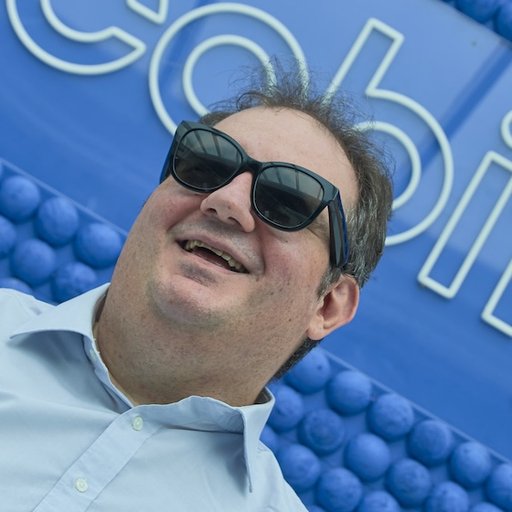
Accessible Software Engineer